 BrandTreaty
AI & Likeness Clauses: Can a Brand Clone You? What to Check Before You Sign
A new clause is showing up in brand deals: the right to recreate your face and voice with AI. Here's what it means, what the law covers in 2026, and how to protect yourself.
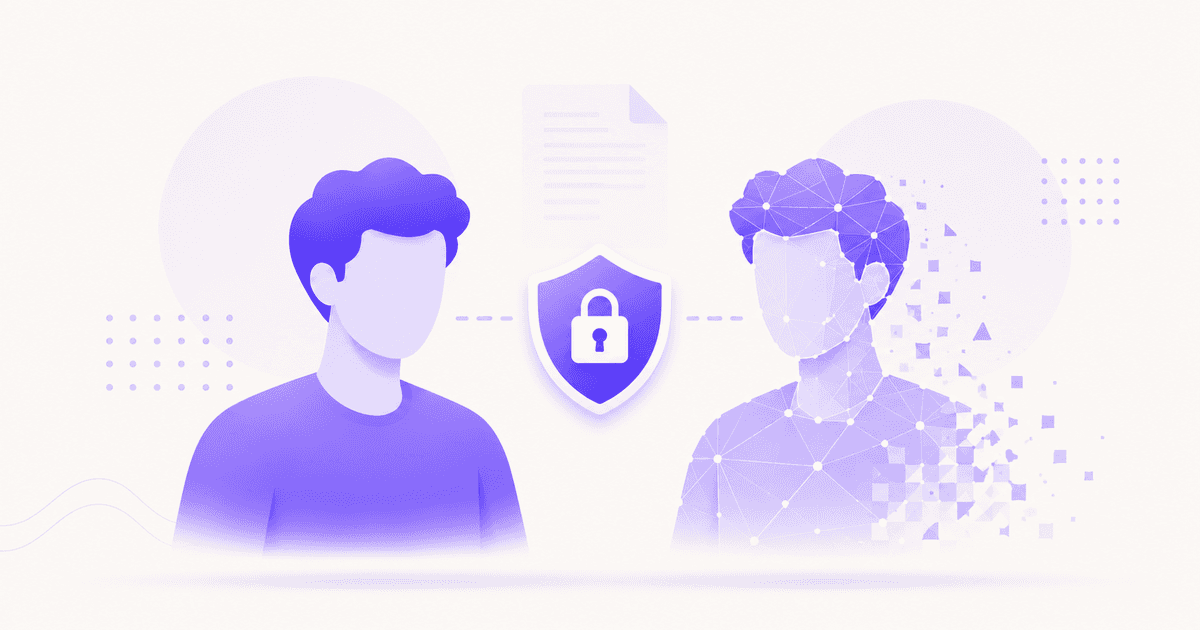
Here's a clause that barely existed a couple of years ago and now shows up in real brand deals: the right to recreate you with AI.
Not just use the video you filmed — but use your face and voice to generate new content you were never part of. It sounds like science fiction. It's in contracts today. Let's make sure you know what you're signing.
Heads up: this is general education, not legal advice, and this area of law is changing fast. For a specific deal — especially a big one — talk to a lawyer. The point here is to help you spot the clause and ask the right questions.
What an AI/likeness clause actually asks for
A likeness clause is about your identity — your face, your voice, your image. An AI likeness clause takes it a step further: it asks for the right to use that identity with artificial intelligence. Depending on the wording, that can include:
- Generating new ads featuring "you" — without filming you again.
- Creating a digital double (a synthetic version of your face/voice).
- Using your content to train an AI model.
- Editing or altering your appearance or words after the fact.
The everyday version is harmless-sounding ("we may edit the content"). The serious version lets a brand keep producing "you" long after the campaign — saying things you never said, selling things you never agreed to.
Why brands are asking for it
Simple economics: AI is cheaper than a reshoot. If a brand can license your likeness once and then generate unlimited variations, they save time and money — and they're no longer dependent on your schedule (or your rates) for the next ad.
That's exactly why you should treat this as one of the most valuable things you can grant — on the level of usage rights, or above. It's not a throwaway line.
What the law covers in 2026 (the honest version)
This is where creators get a false sense of safety. The law here is a patchwork, and it's evolving:
- No federal AI-likeness law yet. The NO FAKES Act — which would create a national "digital replica" right — has been introduced in Congress with bipartisan support but has not been passed.
- Right of publicity exists in many states (it protects the commercial use of your name, image, and likeness), but the strength varies widely by state.
- Some states act specifically on AI. Tennessee's ELVIS Act (in effect since July 1, 2024) protects your voice and likeness from AI imitation. Other states — including Washington, which added "forged digital likenesses" to its law (effective June 10, 2026) — are following, and New York, Illinois, Texas, and Utah have been active too.
The takeaway: don't count on the law to save you. Protections depend on where you live and are still catching up to the tech. Your contract is your real protection.
The words to watch for
Scan for these. Any of them means AI/likeness rights are on the table:
- "synthetic media" / "generative AI"
- "digital replica" / "digital double" / "virtual version"
- "AI/ML training" / "train models on"
- "simulate, recreate, or modify" your likeness/voice
- "in any media now known or hereafter devised" (a catch-all for tech that doesn't exist yet)
Now watch what they're stacked with. "Perpetual," "irrevocable," and "worldwide" next to any of the above is the strongest possible grab — forever, can't-take-it-back, everywhere.
How to push back
You have every right to protect your own face and voice. Try these:
- Carve AI generation out. "This grant covers the content I deliver — not creating new or synthetic versions of me." Clean and simple.
- Require separate consent + a fee. If they want AI rights, make it its own conversation: "Any AI-generated or altered version of my likeness needs my written approval and a separate fee."
- Ban model training. Add: "My content will not be used to train AI models."
- Time-box it. Like all usage rights, never grant likeness rights "in perpetuity" — that one word is costly enough on normal content, let alone your digital twin.
If they truly need AI rights, price them like a premium — because they are. See how to price usage and likeness add-ons.
The bottom line
Your face and voice are your business. A brand can ask to recreate them with AI — but you decide whether they can, for how long, and for how much. Read for the clause, carve it out or price it high, and never sign your likeness away forever for a one-time fee.
This is one of the trickiest clauses to catch by eye, which is exactly why BrandTreaty scans for it. It reads each contract, flags AI and likeness language — "synthetic," "digital replica," "perpetual" — and explains in plain words what the brand is actually asking for, so you can protect yourself before you sign. It's your identity. Keep it yours.
Frequently asked questions
What is an AI likeness clause in a brand deal?
It's contract language that gives a brand the right to use your face, voice, or image with AI — for example, to generate new ads, create a 'digital double,' or train an AI model on your content. It goes beyond using the video you actually filmed; it can let them make new content that looks like you.
Is it legal for a brand to recreate me with AI?
If you signed a contract giving them that right, often yes. Without your consent, it's more complicated and depends on where you live. There's no single federal AI-likeness law in 2026 — the NO FAKES Act has been proposed but not passed — though some states (like Tennessee under the ELVIS Act) protect your voice and likeness from AI imitation.
What words signal an AI likeness clause?
Look for 'synthetic media,' 'digital replica' or 'digital double,' 'AI/ML training,' 'simulate or recreate your likeness,' and broad catch-alls like 'in any media now known or hereafter devised.' Stacked with 'perpetual' and 'irrevocable,' that's a clause to slow down on.
How do I push back on an AI clause?
Ask to carve AI generation out entirely, or require separate written consent and a separate fee before they create any synthetic version of you. Also ask them not to use your content to train AI models. If they want those rights, price them like the major grant they are.
BrandTreaty is an organizational tool, not legal advice. The numbers here are industry ranges, not fixed rates — your niche, engagement, and audience matter more than follower count. Always confirm terms yourself before you sign.